02 October 2014

Natural Disasters

I'm rather beginning to think the Japanese wish me well but would rather I confine my travels to other ports o' call.

The last time I set the date three years ahead of time to go to Japan, this happened:


and then this:


and of course shortly thereafter, this:


  Shortly after I returned from Japan in 2011 I started planning for this year's return trip. I'm leaving for Japan in the very, very, very early morning.  Shortly after I arrive, I should encounter this.


I tried to get a little footage showing what a category 4 typhoon looks like on the ground but apparently not that many people, once they're actually inside one, determine that going outside for a while to get footage is their best course of action.  So, here's just a photo:


I have to say I found this a bit surprising in view of the fact that people seem perfectly willing to stick their children's heads in the mouths of grizzly bear for a photo to amuse and one-up the neighbors with, or, you know, insert your stupidest photo-taking   I found this one,

but like the child/bear thing this involves someone else's being in danger rather than the photographer.  So maybe, I don't know, there's something about category 4 typhoons that instill a certain amount of reasonableness in people.  Maybe, you know, people who live in the world of typhoons are less likely to be stupid than people who live in the world of hurricanes.


I'm not sure the evidence bears this out however:


Whatever the truth of the matter, however, I will be flying in to Kyoto from the northeast just as typhoon Phanfone (sorry, if you're trying to pronounce that you're on your own) arrives from the southwest.  I've been in hurricanes before, but in all cases I've been in the mountains in temperate climates, usually hours from the sea, which I understand not to be the friendliest environment for tropical storms.

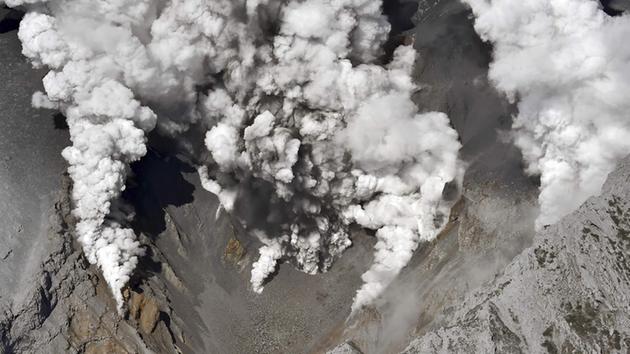
And, who knows, maybe a class 4 typhoon could in a small way settle down the output of Ontakesan, the volcano that just blew in Japan.  In any event I wish you whatever kind of weather you prefer; I'm guess at least that doesn't include volcanoes.  


Whatever your preferences, if you know me, or if you've read much of my little blog, you know that I love rain. Swimming while walking in my street clothes, however, may be another matter.  Also, whether or when I can next blog may be problematic.  Anyway,  じゃまたね、see you soon I hope.


08 January 2014

Date and Time, and a Sense of Place

There's a date and time and probable places for the 2014 trip.  Huzzah.

Departing 3 October 2014.  Staying I hope in Fukuoka, Kanazawa and Nara.  No itinerary yet but I think I know where I'm staying.  

I also wanted to be serious just for a second or two.  I'd like to introduce a friend of mine, the map of Japan superimposed on a map of the eastern U.S.  I don't necessarily like making it so large that it dwarfs the rest of my blog, but I want you to be able to see it, so I don't think I have a lot of choice.

It's really bigger than a lot of people think.


This image has fidelity not only of size but also of latitude, meaning that cities and towns shown on the maps have the same relative latitude, or distance north of the equator.  So for example you'll notice that my current favorite city, Kyoto, has a latitude very close to that of Charlotte and, incidentally, to Henderson County, NC, my home.

Part of the reason I'm showing this map is that there were a number of people who were concerned about my safety when I went to Japan in 2011 a little less than three months after the Fukushima nuclear plant incident.  I kind of wish I'd had this handy map to show those people then.  The plant is just above the top of the "N" in the word "HONSHU," designating the largest of Japan's component islands.  So that would put the nuclear plant, on this map, about 150-200 miles east southeast of Washington DC, well off the east coast of Virginia. 

Kyoto in this case would be in the eastern suburbs of Charlotte NC.  Anyone who drives this area would realize that if this were all land it would take 7 hours of hard driving time on a clear interstate highway (including, I'd suggest, clear of pesky Highway Patrol vehicles with radar guns) to get from one to the other.  When you consider that radiation effects diminish more or less with the cube of the distance between the two spots, you realize that the plant's problems really didn't affect people in Kyoto.  It did however give me clear sailing from long lines of foreign tourists, who didn't realize how small the radiation effects would be in Kyoto.

This also gives you an idea of how varied the climate is in various parts of Japan, when you consider that even the parts of Japan shown on this map stretch from Florida to Canada, and the map doesn't even show Okinawa, the largest of the Ryuku islands that would on this map be well down into the Gulf of Mexico, maybe three hundred miles off the coast of Fort Myers Florida, perhaps about the halfway point on a line between New Orleans and Havana, Cuba.

If you're interested in where I'll be, Fukuoka is the southwesternmost city shown on the map of Japan.  Nara is just south of Kyoto, show on the map in southwestern Honshu (that big island), and Kanazawa, not shown here, is at the base of the western side of the large peninsula that looks a little like Denmark jutting up from the western coast of Honshu.  If you think Japan looks like a dragon, and some people do, this peninsula would be sticking up from the lower back. That's the one.

So, Japanese geography.  My trip in October.  Already gearing up for it. 


04 March 2013

Don't know the word for squishy

I can't find the word for it yet, but I don't think slimy "nurunuru" is the one I'm looking for.

I'm climbing back into the whole going-to-Japan thing, and not, IMHO, a moment too soon.  I've tentatively set a date -- 5 September 2014 -- to go back.  In the meantime I've started retackling the language, and with a vengeance.  It's in my head all the time.

In that respect, you may, if you're one of my few regular readers, recall something I referred to in a previous  post as an "Octopop."  It's a baby octopus on a stick.  I looked at it at the time, there in the Nishiki Market in Kyoto, with a big old fish-eye.

Get it?

Too octopus-like for me.
The main concern I had about eating one of those things was what I get when I bite into the head.  I like the thought of eating octopus, it's one of my favorite sushi dishes.  I think it's the texture, which is very firm (I once heard it described as "jaw wrestling").  No, it's not the idea of eating octopus that I mind, far from it.  It's the idea of eating whatever is in the head that I couldn't sign on for.  After years of seeing Star Trek aliens with big heads I kept imagining these little buggers filled with just a massive brain.  I'm just not at octopus brains yet.  Or at least not, you know, raw.  Give me time.

But then recently I went back to a web site for the Nishiki Market, where I saw these delicacies, and read that they're filled with quail eggs.  Well, that's not so bad. Especially if they're hard-boiled.  And at only 200 yen apiece, it's a steal.

So, I went up to our local market, which sells a sort of ex-frozen sushi, and bought some squid salad and, yeah, baby octopus.  That's two things, the squid salad and the baby octopus.  The squid salad I'd already had and, aside from being a trifle too sweet, it was pretty good.  So, I figured, what the heck, buy the octopus.

Octopops at the Nishiki market.  With quail eggs inside.
The nice woman at the counter was not, I'm pretty sure, born in the Southern United States, or really any place within four or five thousand miles of it, and English was certainly not her first language.  Now, I've gotten pretty brave as a rule at trying out my Japanese with people I don't know, but here in my small town every time I've tried it with someone who appears to have a chance of understanding it, I've felt a fool when the person turns out to be from a country that's close to Japan, but not, you know, close enough actually to speak the language.  So, I just asked her in English if the octopus were stuffed with quail eggs.  Well, that went right by her.  It's ok really.  I don't know the word for "quail" anyway, though I'm great with "egg," which is the same in Japanese as "eggs" of course.  It's 卵, pronounced "tamago."  Anyway, to her credit, the lady at the counter had "thank you" down real nice.

So as I said, I bought two of the squid salad and one of the Octopus and went back to work and devoured the squid and then, like an 8-year-old looking at the swimming pool with cold water in it, and knowing I was going to do it sooner or later, I dived right in to the octopus.

Here they are, in a nice neat Japanese orderly way.
I have to say, they are a little too sweet for me.  They have been prepared with some sort of sweet syrupy thing that does not, to my mind, enhance the idea that you're putting a baby anything whole into your mouth and chewing.  It really ought to be pickled or something to go with what's going on. They're squishy and, to be fair, someone who called them "nurunuru" wouldn't be far off the mark.  So, ok, syrupy and slimy.  Also, if you'll compare the ones I had for lunch today with the ones at the Nishiki Market, mine didn't look as -- I don' know -- perky as the ones in the market.  Mine looked, well, dead, and those other ones looked like they were all having fun at a little baby octopus playground.
On octopus playground, with egg

Anyway, this may be my last time for doing the baby octopus thing until I get to Japan, where I hope they will have the same delightful texture and a more satisfactory, that is to say, less slimy-sweet, flavor.

By the way -- inside the head of the ones I had today: no brains, no quail eggs, no memories of a previous life.  It was just, well, empty space.  Someone apparently has the job they'd wanted since early childhood: scooping out baby octopus heads.

12 February 2013

Tokonoma 床の間

There is in the typical Japanese home, and in that I include the typical ryokan room, including the one I stayed in, a little alcove (littler than a room, I mean, which in Japan can mean pretty small) called a tokonoma, 床の間 in kanji.  It means, literally, "alcove."  It is for contemplation, display of heirlooms or a small piece of pottery, and typically perhaps a plant, maybe a flower.

My own takonoma!
When I came back from my first (and only, so far) trip to Japan I brought that beautiful culture with me, in a small way.  I brought back tea with me in a large way, and I drink tea almost every day at work.  

Anyway, over time a friend and I made this little credenza in my office into something of a combination tokonoma and tea service.  It is not, strictly speaking, an alcove, because it's just on a credenza, as I said, that sticks out from the wall.  And, to tell the truth, it shares space with a fax machine.  I don't know how many businesses in Japan have tokonoma that contain fax machines, but my guess is not many, and my further guess is that most of those are situated in the rooms of gaijin, foreigners.   Which of course I am, as I have plainly admitted many times.

Since writing the previous paragraph, I've done what I could to make this a better tokonoma.  Ganbatte, as they say -- do your best.  To the right is a photo of my little alcove as it appears in the middle of March 2013:


Still, though my desk gets messy easily, I do my best to keep my tokonoma-like area more tokonoma-like. 


The one at my ryokan.  Ganesha in foreground.  

27 February 2012

A little news.  I've decided to go back.  2014.  Probably, but not certainly, Kyoto again.  It won't be during the tsuyu, the rainy season.  Though I love that, I want to try a different time of year, a time perhaps when there are festivals or something.  Maybe fall.  Anyway, that's what I've decided.

Maybe in the fall.

25 June 2011

Shopping Kyoto

I've mentioned already that there's a lot of shopping to be done in Kyoto for foreigners, and, strictly speaking, it's not limited to deodorant.  Right now I'd like to take you on a little tour of the Nishiki Market. 

You're not as interested in the fascinating history of the market as I am, and please never underestimate my ability and tendency to bore anyone to death on just about any subject as long as they keep anything like a receptive look on their face or are not saying, "pardon me while I go get into my pajamas."  So I'll skip over the fascinating history of the market and get right to the, uh, market.

The first matter of interest concerning the nishiki market is its fascinating history.  It's been going on  in more or less the same place for six or seven hundred years.  It started as a fish market and gradually became a combination fish market and market for all kinds of other things.  It runs parallel to Shijo Dori, the main street that was a click north of where I was staying, so the west end of the market was about two blocks from me. 

Japanese lanterns -- how clever
The market is essentially both sides of the street, except that because the storefronts encroach into what doubtless was once the street, the "street" now is just a space between the storefront, the width of three or four people, maybe.  Or, I guess, nineteen or twenty Japanese people. 

It's roofed, which is useful in the rainy season and probably winter, too, and it's several blocks long, so there's a break at the end of the block for cars to mow you down when you cross the street.  Incidentally, those spots where the streets cross the market are the only places in all of Japan I ever saw where traffic doesn't yield to pedestrians, but rather the other way around.  I think there must some unwritten understanding, or, I guess, maybe it's just written in Japanese.  That would make some sense, I suppose.

Just the thing to quiet that crying child
Probably about half of the stalls are fish stalls.  I use the word "fish" in the Japanese rather than the American sense.  Fish, shellfish, fish heads, salted fish, raw fish, tempura (fried) fish.  I think rather my favorite was what I called the octopop.  I don't know how many words this picture is worth, so instead of doing the math I'll just post the pic. 

It may be hard to tell from the pic, but, yeah, the head is just about the size of a tootsie pop, except that I don't think it has a surprise chocolate filling, though, not having tried it I coudn't say for sure.  I really did try to imagine, though, what is in that squiggly little head.  I admit to being as curious as some and, as concerns Japan at least, perhaps more adventurous than most.  And I do love octopus, it's my favorite sushi.  Still, I walked right on by the octopops.  In answer to the question from the ninth row, yes, people do eat them right on the stick.  Or so I was told.  Maybe someone was pulling my leg.
With or, optional, without brains and eyeballs.

Get it?

For those who like their octopus in a more, I don't know, traditional form, there was just good old octopus tentacle.

In addition to the fish stalls, there were stalls that sold, I think, at least one of everything available anywhere in Kyoto.  Except minutes, I guess, on computers A and B.  There were shoe/sock/slipper stalls, kimono and yukata, stalls that sold fresh eggs and Japanese omelets (with the seaweed cooked in, actually pretty good), fruits, vegetables, green tea ice cream, desserts, porcelain dishes, and one of my favorites, cutlery.

No, not ginzu knives.  This is Japanese knifery in a store started by a bloke who also made swords for samurai warriors, in the 15th century, I think.

My Yanagiba
One of the interesting aspects of Japanese cutlery stores is that all of it is divided into two sides -- one for left handed people and one for everyone else.  In fact, when I expressed an interest in looking at yanagiba  the first thing they wanted to know was whether I was left- or right-handed.

The reason for this is that these knives are sharpened only on one side.  The other side is straight.  What this means is that rather than having two 15-degree edges, for a total of 30 degrees, like a German knife, the Japanese counterpart has one edge, say 12 degrees, for a total of, you know, 12 degrees.  So compared to the Japanese blade the German blade has the slicing power of, say, a ball-peen hammer.

Needless to say that's not for every job, and it requires lots of sharpening (the obliging fellow said sharpening was a snap and then proceeded to give me a rudimentary 45-minute lesson in sharpening the thing which includes such obvious necessities as how to place your feet, what angle to stand at and how far to stand from the counter.  At the end I promised to practice, practice, practice.).  Still, it renders a sharp blade that doesn't have a lot of trouble cutting raw fish.
It's the two symbols at the top, sa & mu (top to bottom)

I'd been looking for a Yanagiba for a while, so I bought this one (the right-handed version of course).  They insisted on putting my name into the blade, so rather than having them deal with my rather difficult last name I just asked them to make it "Samu," close enough.  Which they did.  This is "samu" in katakana, the kana "alphabet" used for difficult German names.

I went to the Nishiki Market almost every day, though I rarely bought anything, just a yukata and the knife (with sharpening stone, which works either left- or right-).  If you ever go to Kyoto, yes, by all means see the pagodas and the temples and the shrines.  See all the sights, but I urge you not to miss the Nishiki Market.  The sights, and the sounds, and the smells, all not to be missed.

24 June 2011

More Blogs about Buildings and Food

It could be anything, really.
I spoke recently about pachinko as being a central fact of walking down the street in Japan.  Fortunately, with an apparent total lack of zoning in Japan, every next place on any street can be a surprise.  The next spot on the street might really be anything, even something other than a pachinko parlor. 

I'm going to be talking for a minute about restaurants.  I think I might have mentioned this earlier, but I want to talk about it a bit more, because really Japan means restaurants.  We might like to think of it as Japanese food, but as Chandler would say, of course over there they just call it "food."

The reason there are so many restaurants all over Japan is pretty much the reason there are so many restaurants in big cities everywhere.  Because it's so mountainous 125 million people in Japan are living on about 25% of the land area.  As a result, the average Japanese family home is less than half the size of the American home.

As a result, the Japanese don't do much in-home entertaining.  In the U.S., TV solved that problem for us.  The Japanese, when they're socializing, often do it at restaurants though.

This one includes the dessert menu
 I love the ingenious way they display their wares.  Elsewhere, we put up menus, which rarely have photos.  The Japanese want to get those salivary glands working before you get into the building, so they put up plastic mock-ups of the possibilities.

They're usually pretty good, believe it or not.  I'm not saying you develop a sudden taste for plastic, and you are rarely fooled into thinking you're looking at the real thing because, of course, the plates and bowls are on their sides facing you and they do still have gravity in Japan. 

But they're showing you a lot about what it is, and even if you don't speak Japanese, there's usually a photo menu in the restaurant to match it up with the window display, and with the help of useful hand gestures including pointing, you often don't need Japanese in most of the restaurants most of the time.  And, if you do have a problem, you can always ask, "Nan desu ka" which in most restaurants means "what is that" but in Indian restaurants, of which there seem to be a lot, it might mean "Is that naan?"

Incidentally, the names of the foods are not always only in Japanese; sometimes they have English too, and even when they're in Japanese script, the name might be something that, if they tell you the Japanese name, you might recognize.  I was just looking at that photo above, for example.  The lower left-hand corner of the bottom shelf, the one that's not apparently a cup of tea, is labeled "Moka furoto."  So, that's a mocha float.  So, that sounds good and now I want a moka furoto.

And Look

I might as well go into this now.  Shop names were one of my favorite parts of looking around the Streets of Japan.  The ones in English, anyway, which is lots of them, and at the Kyoto Station, really most or maybe even all of them. 

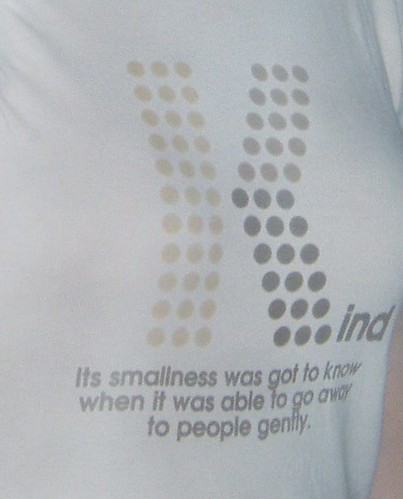
When was your smallness got to know?
In case  you didn't catch Soup, below, you might want to check that out.  Notice, Soup isn't in the restaurant trade.  It's more your higher-end, what do they call it, "upscale" women's clothing.  No T-Shirts saying "Its smallness was got to know when it was able to go away to people gently," although goodness knows, maybe that's upscale.  I don't have a great sense of these things (I did, however, sincerely appreciate the fact that the designer of the t-shirt was sufficiently familiar with the intricacies of English grammar not to insert the unwanted apostrophe in "Its").  I also love that the motif is the word "Kind," one of my favorite words.

I could have really spent a day taking photos of shop titles of this kind.  One I took, partly for the plastic-food value and partly for lawyers, or for anyone who knows that it's a subject I taught in law school, is "UCC."  I don't know what it stands for, but it doesn't really have sufficiently broad appeal for me to print it here.

My favorite one, though, was a hair salon kind of right around the corner from me.  You've gathered by now that shop names are not picked primarily for marketing purposes, the way they might be in the U.S.  Nothing like UR BEST produce shop or TAS-T-SWEET ice cream.  No, so often in Japan they just pick a word, and whatever it is seems to do the trick.

I just don't know . . .
That said, I'm not sure they always give the kind of thought they should to some of these names.  This shop I mentioned, well, it would have made me think twice about even going in to check things out.


Welcome UK, Belgium and India.

23 June 2011

Sumimasen

Pardon me, the time change hit me a lot harder than it has in the past.  On the other hand, it's a bit more of a time change than I'm used to.  I think maybe on the way over there I just went with it, you know, getting up at 4 a.m. and going to bed at 6 p.m.  Here I have this little work thing that's messing with my hours.

Anyway, I promised myself I'd keep writing and now, at 5 a.m., I have a full night's sleep and a chance to write undisturbed, I think.
Does not consider self to be friend of camera.

A friend asked me for proof that I was actually in Japan.  I think her words were a bit less confrontational, like, "do you have any photos of yourself?"  Well, there are a couple.  I do not consider myself a photogenic person in the main, but I will publish this just because I have it, in answer to that question.  It was taken by my friend Ishida san after I took a photo of her my first day at Ippo-do tea house.  I took a lot of photos at Ippo-do, possibly because that's where my camera and I were a lot of the time.

Since it's up there, I will point out that the subject of this photo does probably look as though he's been walking a lot in the Kyoto June heat, though evidence of need of 8x4 Smart Citrus Japanese Deodorant does not yet appear here.  Of course a lot of the evidence is not the kind that shows up in photographs, if you, uh, get my drift.

Scrining

This blog has the unhappy inability to explain Kyoto and the Kansai area in more than one of the five senses (I say "unhappy" despite the suggestion of the previous paragraph), where all five are important to one degree or another, and hearing and smell almost as important as sight.  Nonetheless, we must deal with what we have, and so I'm going to try to explain scrining.  If the word already suggests the sense of hearing to you, you're getting into the swing of things here.

When I was getting ready to go to Japan, as you know, I spent some time studying the language.  I did this in my own special way, which usually included a computer and about 8-9 books in front of me.  Still, there were questions that my books and even Google Almighty didn't help me with, at least for a while.

One of these was the difference between "youkoso" which I understood to mean "welcome," and "irasshaimase," which means, uh, "welcome."  You'd think there would be a lot of discussion somewhere on the difference in meaning between two words with the same denotation.

Let's dispense with "youkoso" (don't pronounce the u, much, so it sounds more like yokoso).  It means welcome, usually to my home.  That's enough of that.

Irasshaimase "ir ra shy mah seh" could as easily be translated "please come in," and it's used almost exclusively in commercial settings. In fact, it is called out from retail establishments of all kinds.  Called out, and called out, and called out.  There's nothing close to the actual experience.

Oh shut up

Imagine yourself taking a lovely walk through a suburban neighborhood early in the morning.  You haven't had your coffee yet, maybe, that's waiting for when you get back.  It's just you and the quiet yards and the trees, ok maybe a bird or two.  Or you even walk by a yard where a dog barks from the back yard.

The dog across the street is now alerted and sets off on its own barking, either because it now sees you, or because it has to keep up with the Joneses' dog, or who knows what makes dogs bark.  My sister had a dog that barked at the bark it just heard, not remembering that that was its own previous bark.  But then, that dog ate pens, so.

But anyway in no time you have a neighborhood of frenzied howling.

Let us return now to the peaceful days of the Japanese market.  What was the bark in your neighborhood is the market call, "irrashaimasehhhhhhh!"  It's not exactly a whine, and not completely a screech.  It's a scrine.  It almost defines the word "shrill."
Taking a scrining timeout to give the photo v.

The cool thing is, there might be shoppers nearby, or there might not be.  Anything can set a scriner off.  Sometimes they won't even have seen you, it will just be the memory of a customer who was in the store or walking by out front earlier, and an employee will call out, spontaneously, "masehhhhhhhh," at which point a chain reaction will sweep the section, the store, the mall (or those parts of it not already undergoing their own outbreak).

Of course, any time you actually walk into a store (and remember territorial waters are included to a distance of about 100 feet from the entrance), you necessarily set off a round of it.  But making a slight movement while in the store will also set it off.  The employees do it by reflex, and may not even be aware they're doing it.

You: (scratch nose)

1st employee (washing window): Shaimasehhhhhh
2nd employee (straightening stock on shelf): Masehhh
Chorus: Irras-massehhh-shaimasehhhhhh-irasshaiiii (like dogs, each employee has his or her own call).

They're not restricted to that word, but it seems to be the fall-back.

After a good bit of searching, I finally found a scrine clip, from some unknown location.  I'll treat you to it here:


That's what scrining sounds like.

Not a lot of scrining at the fancy places like, uh, Soup
Sometimes there would be scrine-offs.  These were clearly intentional, and were competitions between scriners, possibly on their way to the all-Japans. I'm sure the Kyoto station has a number of all-Japan finalists.  I witnessed one poor beginner in a Takatsuki station drug store being absolutely demolished by a nearby scriner in a waffle shop.

The shops themselves really weren't much competing, but the scriners meant every word of it.  I'm sure one day she'll get her voice, but you could hear the waffle guy probably all the way to Osaka.  I'd mention, in his favor, that women tend to have a natural competitive edge because of their vocal range (as an example, listen to the totally out-classed guy at 0:28 on the above YouTube clip). I don't know what Mr. Waffle Man (not his real name) was using but I was surprised on returning a few hours later that she was still challenging him, giving it her best ("ganbatte").  It's that Japanese spirit of keeping up the manager's honor, I imagine.

Scrining.  It isn't for sissies.

P.S.  Oh my!  Philippines!  Youkoso, Philippines!

19 June 2011

Main Street Kyoto

Just a little for the moment about one small aspect of my favorite city in Asia (where I've only ever been to one country), Kyoto.

It isn't really main street, of course (no jokes about chow mein street please).  For me, in Kyoto, it was three streets mostly, Shijo Dori ("Fourth Street," close enough) Karasuma Dori, the street I walked down to get to the station, and Kawaramachi Dori.

Day when seven adheres
Despite its largely old-world snooty whatever reputation, doubtless deserved in the main, Kyoto is loaded with pachinko parlors.  On the off-hand chance that you're neither East-Asian nor Jewish, pachinko is the Asian version of slot machines, played with little silver balls, the size of peas, about.  For purposes of this blog, and probably only for those purposes, I really wanted to pop into one of those parlors and take a gander.

The only problem is that, like slots, pachinko machines require the air to contain two parts per two-and-a-half of cigarette smoke in order to function.  One is minding one's own business, Japan's number one pastime, walking down the street, and suddenly the automatic doors of a pachinko room will open in order to allow a person to enter or escape, and passers-by are hit with a huge blast of cigarette-perfumed pachinkorrhea.  One also hears the little bells announcing to the other players and outsiders that yet another lucky player has been rewarded with a payoff.

Your Life Could Be So Cool

You kind of notice a couple of things right off.  The first is that the only way you can think of to make money faster and easier than owning a pachinko parlor would be just to go into a bank and help yourself.  That appears to be against the social norms here, though, so most people don't do it. Other than that, making money this way involves a two step process: (1) set up one of these pachinko parlors and (2) wait.

I know it sounds a lot like Las Vegas and for all I know it is, but in Las Vegas you get a sense of lots of pesky Gaming Regulators and that sort of thing, to kind of put some sort of, I don't know, challenge into the whole thing.  They may have regulators here for all I know but it kind of doesn't feel like it.  I don't know what the Gaming Regulatory Menace feels like, really, though, so maybe I should just Shut Up About It.

Ways you could be if you played Pachinko
The other thing I DID notice was the advertising, which is to say, really, the marketing.  The marketing is not about winning money or thinking you might win money or even having fun.  The marketing is about how cool your life would be if you played pachinko right now.

You're walking down the street, engaging in You Know What, and all of a sudden it comes into your head that your life could be really cool.  Depending who you are and what you'd like to look like and what sort of person you'd like to attract to your completely awesome new presence, there's a poster image for you.  They don't really tell you which image you'd look like or be like or who you'd attract -- they just put the images on the posters and let your imagination do the rest.

The images are mostly of hot chicks and, excuse me, power-rangery type dudes, mostly.  So if you spend your time going to work either on foot or on the subway, with a navy blue suit (men and women both wear navy suits mostly) and white shirt and soon-to-be-unpatriotic (I'll explain that another time) tie, which is to say, half the population of Kyoto, or if you wear any uniform other than the above-described, which is to say, the other half of the population, and you want to become really cool, come on in and play pachinko.  If you're a Japanese guy in particular, other than Ken Watanabe, this has a certain appeal.

The Luck Factor

The other part of this that I find fascinating is the peculiar Japanese fascination with Luck.  Or maybe I should say East Asian.  (BTW if you're over 47, "East Asian" means "oriental."  I have no idea whatever happened to that word, when it became out of fashion to use it or anything, I don't think it's exactly on the list of Words You Should Not Say, but just for purposes of this blog, go with me.)

Spock's Life Could Be So Cool
The thing is, East Asians as a group are often considered very logical and pragmatic.  So, yeah, if the Earth were the USS Enterprise, you know who the Japanese and Chinese would get to play.  Also, they don't normally get hooked into dogmatic religious controls of their behavior.  But the thing is, luck does seem to form part of their culture, and it does kind of, in a strange way, affect their daily behavior.

Where I'm going with this ("Aha!" you say.  "I knew there was going to be a Point!") is that the pachinko parlors also really play on the luck thing.  Again, they don't talk of this really in terms of money won or lost.  And well they might not.  They just seem to suggest that if you play pachinko the force is going to be with you.  Hence the top photo.

Day when seven adheres

The top photo, I don't know how well y'all in the back can see this, some of these if you click on them will open up.  The top photo is of a poster both on and outside a pachinko room that says, among other things, "7 17 27.  Days when seven adheres."

Odd numbers in Japan are lucky.  Which, you know, really ups Your Chances To Win.  In the U.S., as far as I know, it's mostly 7 good, 13 bad, and the rest is just you pick 'em.  But in Japan, pretty much your chances of getting lucky is 50%, while getting unlucky is mostly limited to the number 4, about which later, although it could be said that with odd numbers lucky, you're kind of unlucky just by not ending up with one.

But in any event, this poster is calling on the forces of 7.  I don't think they're telling us all to come back and be big winners on July 17 2027 (although I'm guessing that's going to be a big day for the stockholders in the pachinko-parlor world).  I think that they're suggesting that the forces of, I don't know, good lucky strength powerness, whatever, will be at their top strength powernessness on those three days of the month, 7, 17, 27.  You know, days when 7 adheres.  So that's good because even poor little February has all those days.  Anyway, I took that picture on the 16th I think, so they must have put out their posters just to really get people in the mood for thinking about strength powerness.  Whether they had similar posters for other odd days I don't remember, because I wasn't really looking at their posters earlier, just mostly trying to avoid the nicotene blasts.

お帰りなさい Welcome back

I'm back in the US now.  I miss Kyoto, I told you I would, but I slept in a bed last night and that felt kind of luxurious.

I have a friend who told me this trip would change me, and it has, at least for now.  It has changed me in some ways I know, and in other lifestyle ways I hope stick with me for a while.  And it's changed me I'm sure, for better or worse, in some ways I really have no idea of.

I don't want to harp on this; no, ok, I do for a little while.  I was in the airports, it seemed so long, it felt like a couple dozen of them yesterday (got the bus at 6 a.m. for Itami airport Osaka, to Tokyo, to Chicago, to Dulles DC, to Greenville/Spartanburg).  Almost nobody was taking the stairs at any of those airports outside of Japan.
Stairs are usually quicker.  This photo is in Korea BTW.


It sounds a whole lot, I know, like I'm criticizing these non-stair takers, but I promise I'm not.  I worry about two things in this blog, a lot.  I worry about a lot of stuff a lot of the time, but here, I worry about sounding like I'm down on the US and Americans, and I worry about sounding like I think the Japanese are better than we are.  I don't think any of those things.  But I think there are probably things almost every society could learn to its benefit from others.  There are, IMHO, plenty of things the Japanese society could learn to its benefit from ours.  But the idea that the less I move my body the happier I'll be, even in the short run, is something I hope to have shed myself of for a while.

The Staring Principle

Toward the last couple of days in Japan I started taking photos of things I had meant to take them of before.  I regret that I operated a little on the Staring Principle of candid photography, which is my theory that taking a candid photo of someone I don't know is kind of the electronic equivalent of staring at that person, and I didn't do it more than I had to, or at least I tried not to let them know I was doing it.  And so I don't have a lot of candid photos of Japanese people, or that is to say, not many good ones.

click for a larger version
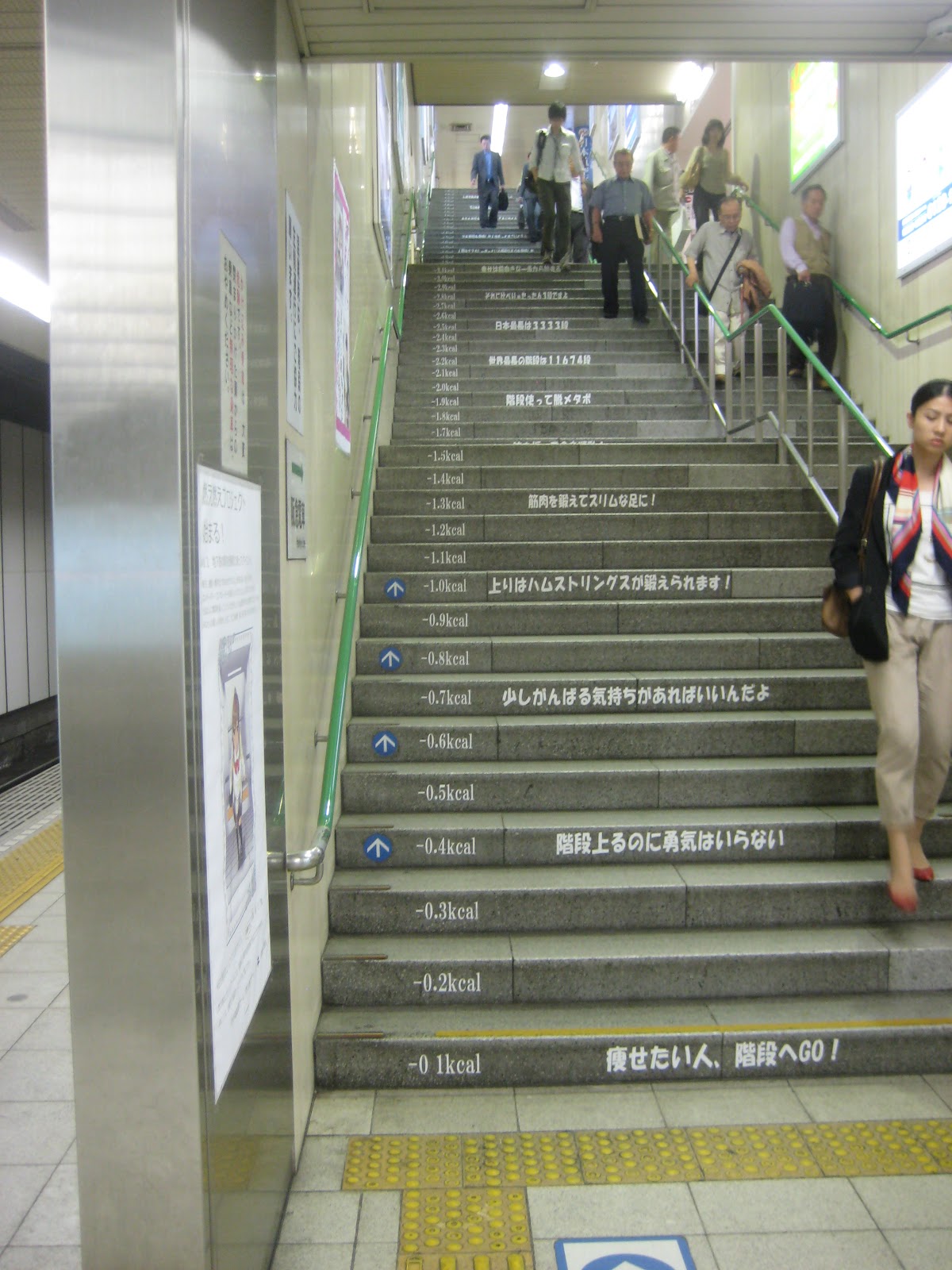
I did get this photo in the last day or two of one set of stairs up from the subway stop at the intersection of Shijo Dori and Karasuma Dori, the stop closest to my ryokan.  It shows the number of calories per step.  I don't know exactly who this is for, or what it means -- is this the difference between taking that step and standing on an escalator for the same period of time?  Is this the amount for some person of hypothetical Average Japanese Weight?  Heavier people are lifting more weight up a stair than lighter people and presumably have to use more energy to do it.

Anyway, what it did for me was remind me, every time I got to the foot of an escalator/stair alternative, that I had a choice.  That's all.

P.S.  If you're interested, I've started going back to old posts and putting in some photos. Changed the one of Ken Watanabe too.

Update 13 March 2013:

According to one of my gurus, Namiko Abe, the word for nine, which can be pronounced "ku," (although it can alternatively be pronounced "kyu," which sounds like "ku" but I believe is unrelated), is the same pronunciation for the word for "agony" or "torture."  So, you don't want agony or torture to adhere I guess, and that makes that one unlucky, especially, she says, in hospitals, which sometimes eliminate those floors from their numbering system.

Interestingly, in their neo-Japano-western paracultural way they sometimes also eliminate the 13th floor out of a sort of pro-western sensibility.

So, I suppose it's possible to explain to someone that your office is on the 17th floor of a 14-story building.  Another reason to love Japan, not that either of us needs one.

16 June 2011

Sayounara さようなら

Sayounara to Japan, that is, not to you. 

I moved to Osaka (accent on the first syllable) last night -- it wasn`t so bad, really considering the slight train problem.  The nice person who sold me the ticket indicated that my train left from track 7, but apparently thought it sufficiently obvious that I would have to change trains in Osaka Station that she need not mention it.  I got suspicious though when we left Osaka station traveling west, so I summoned up the courage to leave my seat and carefully examine the map posted above the door.

I didn`t see my station, and so at the VERY last second I jumped out WITH my luggage at the next station. 

Here`s where my study of Japanese got me into trouble.

I walked up to the nice man and asked him (after taking my common course, which is to rehearse the question in my head, including pronunciation) where I had gone wrong and how to get to Tennoji Station.  What followed was a torrent of syllables that had not the least meaning to me.  He might as well have been speaking Chinese.

get it?

Anyway, it happens sometimes.  I have a pretty limited vocabulary, things-going-unexpectedly-wise, and I probably couldn`t understand my own name when it gets said to me this fast.  So I just stared at him, and had the courtesy, which is as you know pretty big here, to thank him and nod and walk in the direction his eyes were looking.  After only one false start I found the track and confirmed it with another officer.  I think if I were me three years ago listening to myself now do this Japanese thing I would be pretty satisfied but I sure feel helpless sometimes.

Oh, btw, it rained here last night, pretty much all night, I think.  In fact it was raining late yesterday afternoon when I got off the train in Osaka.  Thank you, tsuyu.

A Scrap of Paper.


I'm Home!  Photos!!!
I was at one of the station entrances trying to decide which way to go (another kind of long story that I`m not going to tell at the moment) when out of the corner of my eye I saw a little thing flutter.  I looked -- it was a little scrap of paper, a couple of square inches, fluttering to the ground.  The kind, for example, that could have come off the end of a pack of Men`s Plum Candy, though I don't think it was. 

I looked up to the figure standing over it.  I won`t tell you how I know, but he was definitely western and I really think one of my own countrymen.  And, odds are, yours too.  He looked at the piece of paper.  Then he glanced at me.  Then he looked away.  I know something was going through his mind, and I really think it had something to do with the scrap of paper.  I wanted to pick it up, and in hindsight I should have.  I should have shown the person who I hope was a very new newcomer that there`s no shame in retrieving your own paper over here and perhaps a little in not doing so.  I wanted to show him that team spirit suggests we all do our part here, and that goes so far as to do each others` parts.  But I didn`t.  I can`t tell you why.  For all I know that piece of paper is still there.  If I see it today I`ll pick it up but I`ll have missed my chance with that man.   

The train ride back here this morning

A bunch of kids on an outing.  With their teacher, on my train.  They are not quite as stand-offish as their elders and eventually through the extreme perseverance of Hiro (not his real name) we (meaning just about all 20 or so of them and I) struck up a conversation of sorts.  When the conversation got out of my depth the teacher and I negotiated some translation.  Incidentally the kids knew two English words (one of them twice), or at least were giving up that much: "peace" and "bye-bye." 

They all look like this.  It's not a great photo, but they do.
We asked each other a number of questions, age, name, home, the standard introductory stuff.  They were all 8 and 9 years old, and dressed, as most kids here seem to be, in a school uniform of sorts, which is invariably white shirt or blouse, navy pants or skirt, and white socks.  As the girls get older and go to middle school their skirt uniform sometimes varies to something conservative but not necessarily navy.  It was nice to be talking to 8- and 9-year-olds because at the moment that`s the language level I aspire to, so although we were out of my depth in many senses it was still a lot of fun.

The students were on some sort of field trip, which was a nice thing for me because, as often happens (and occasionally for good reason, as explained earlier), I wasn`t positive I was on the right train.  When you get off the Tokyo-Osaka main line stuff, English tends to fade from the schedules and signs and such.  Anyway, the students` task this morning apparently was to fill in the little chart showing what stations their train had stopped in, and maybe something they saw there.  So All I Had To Do was look at their chart and there, sure enough, was the kanji 大阪, for Osaka, which as it happens I know.  Thank you kids.

And Last (last entry in Japan)

Ishida san, my favorite Ippo-Do helper
Will be Ippo-do, my tea shop.  I will go to tea, which I now am getting reasonably adept at for a foreigner.  I will have a pot of gyokuro and get some sencha and play sidewalk bushido and lose, as I almost always do (won one yesterday, so my record now stands at something like 1-588).  I am loaded up with Smart Citrus and brought some with me.  I have been quasi-communicating with Ann`s cousin, who`s back from the U.S. and it`s possible he and I will have dinner together tonight.

I finished The Teahouse Fire, I know I said that before, and left it in a cafe for someone else to find.  I started the Girl with the Dragon Tattoo, I think I might have mentioned that too, though it could have been my Journal.  I have heard a lot about it.  The writing`s not really as great as I`d hoped but he tells a good story, that`s for sure.

Oh, thank you for reminding me I need to buy an alarm clock.  I need to leave not later than 5:30 to be at the airport at 6.  I woke at 4:30 or something today, but I`m not counting on it and I don`t want to be, you know, late.  That wouldn`t be a good thing.

So, goodbye cultural center and computers B and A.  Goodbye Kyoto.  Hello soon my friends at home.

15 June 2011

Japanese Diet

A word to myself and anyone else who thinks that the Japanese diet consists of sushi and side dishes:  Sushi`s not exactly hard to find, but it does not constitute the Japanese national dish any more than sake constitutes the Japanese national drink.  That would be beer, incidentally, and by a huge margin.  Second, somewhat distantly, is wine.  Sake is an also-ran.

Sushi is often on the menu but the big dishes are two things I`ve mostly been avoiding -- one in the past decade or two and one pretty much my whole life: tempura and "red" meat.  My stomach is not on especially friendly terms with fried food a lot of the time, Chick-Fil-A notwithstanding, and I haven`t had meat since, by an odd and unaccountable and (of course) then-unknown coincidence, the day the Watergate Hotel was broken into.  17 June 1972.

They serve a lot of pasta too.  The problem with that is, the Japanese, and you know I LOVE them, overcook their OWN noodles a lot of the time.  So, pasta not so much either.  I can find sushi but it`s just not that easy.

So how do these people ALL stay as thin as rails?  I have to guess two reasons:  one, almost certainly, is that good friend, heredity.  And the other is that at 10 a.m. today as I was walking to the station I noticed that the entire walk along one of the main arteries of Kyoto, there were almost no non-taxi cars.  I think that kind of speaks for itself.  Yeah, there`s a lot of public transportation but it seems as though everybody walks and bikes a whole bunch.  It`s hard for me to imagine someone complaining because they had to park two blocks away instead of one.
So, anyway, I get sushi kind of when I look for it.  I`m hoping to get some for lunch today.

Tsuyu

It hadn`t rained for almost a week, I think, so it saved up its seven-drops-a day and really poured -- you know, a total of whatever that is, forty-two drops.  I`m never going to believe the words "rainy season " again.

Yesterday

Poppins before Disney
All day was devoted, other than internet, showering and paying my ryokan bill, to shopping and tea.  So, I`m thinking, shopping and tea -- who does that remind me of?  I`ll tell you, I think it reminds me of the mother who left her kids all day every day in the charge of Mary Poppins.  I`d say Mrs. Darling but that was Peter Pan, I think.  Anyway, didn`t she dump the babies on Mary Poppins so she could go out to tea and shop every day?  Is that what women with nannies did in Mary Poppins`s day -- dump the kids, and go shopping and to tea?  Upper-middle I mean.  I guess which kids were lucky depends on your point of view.  The Mary Poppins in the movie was a sugary treat.  The one in the books was a good bit drier, not at all unlike Nanny McPhee, and definitely cooler.  Then Disney Winnie-the-Poohed her and took away all her charm.

Just back from shopping, on her way to Tea
Anyway, I`m thrilled to say that after all my shopping I can still close the suitcase.  I still have a little bit to do, too.  I packed this morning and hope not to get into my suitcase again. 

Plum Candy

So, the plum candy.  I received some plum candy, Japanese plum hard candy, from a friend a little over a year ago.  I really didn`t like it, but I tried a second piece.  I`m not usually a fan of hard candy and I`ve never had candy before, that I remember, that`s salty, sweet and sour.  It grew on me, and in pretty short order.  By the time I realized how much I liked it I had thrown the wrapper away, and I didn`t know what it was.

It's a great taste, once you've acquired it
Well, I found it again.  It`s called (in Japanese) "Men`s Plum Candy."  Somebody in charge of the Candy Naming department at Nihon Kandi (not the real name) should be informed that Men`s Plum Candy`s internationally biggest fan spends his days shopping and at tea.  And, really, half of the shopping is tea-related.

Anyway, a lot of what I`m bringing back is Men`s Plum Candy.  Yes, you may have a piece.  Even if you`re not, you know, strictly eligible because of the name.  By weight a lot of what I`m bringing back is a stone.  It goes with the yanagi-ba.

Goodbye Kyoto

Last blogging day in Japan is tomorrow.  I have a lot of photos and I have spoken only in half-hour, generally, fits, so I have more to say even after I get back, if anyone`s still interested.

I have now come to the end of my Kyoto stay.  I will be here tomorrow but as a visitor from out-of-town.  I will miss my friend Kyoto, a bit to my surprise considering how homesick I was a week ago and, sometimes, still am.

I will miss her, as I said, a lot.  I have come to feel a real affection for her, and as you may know, since I mentioned it before, I talk to her a lot, every day.  The problem is, of course, that she really doesn`t exactly talk back, we don`t have conversations, and even if we did, they`re not the kind of conversation I think of, not the kind where she listens when I tell her about my panics and embarrassments and worries.  The two reasons for this are that first she`s not a person and second, and more to the point, she`s Japanese, and we really don`t work that way here, I don`t think.

So, thank you dear reader.  I`ll be back, I hope, as a guest of Kyoto tomorrow, traveling on Saturday, and back in the U.S., back in the U.S., Back in the U.S. Sunday.

P.S.  Welcome Australia.  I always get a big kick out of a new country.  I even did when it was me, twice.

Want to hear a good one?

My ryokan, my inn, has a computer that guests can log onto.  It`s funny, see, because tonight`s my last night at the ryokan and I was paying my charges tonight rather than tomorrow in case my new VISA card had a problem so I could have a full 12hours to panic rather than just the two.  Anyway, the nice owner who`s a really neat guy got to talking and I mentioned I was going to go in to the station and get on the computer and he said, oh we have one here.

Ha ha. 

Oh well, if I had known this a week and a half ago Computer A and I and Computer B and I would never have met.  Anyway, being the slightly Japaneezy sort of person I am I would always be assuming I was holding someone else up, sumimasen, on this computer anyway.  I happen to know I`m the only guest in the Ryokan right now and I still feel as though I`m taking too much time.  For what?

I finished my book the Teahouse Fire last night and left my copy at the coffee house/literary thing called Cafe Bibliotheque HELLO or something unimaginably close to that.  I left it so someone would pick it up and start reading it.

Getting Rich Not Quite as Quick as I Thought

Pretty typical I think.
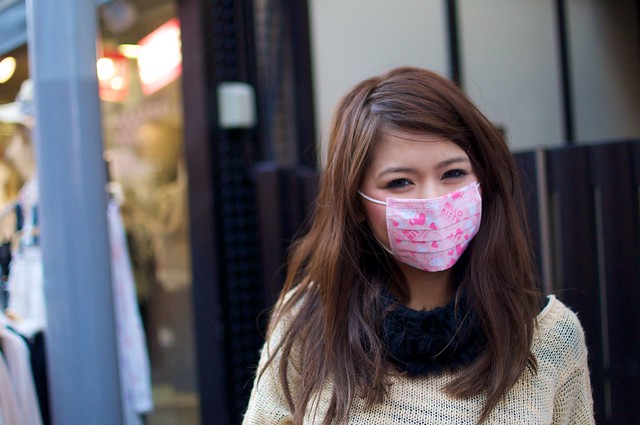
I have to amend my former statement about how many Japanese people wear face masks, at least on the street.  I don`t remember my previous estimate but I think I was guessing about 10-15%.  I took a closer look and I think it`s more like, uh, something substantially less than 1%.  It`s still way more than any place in the US other than, you know, a hospital operating room or something but it`s not going to get me rich quite as quick as I imagined, the idea of selling fashion masks.  Still, rich is rich.  I went into the One-S-One or S-One-S, I can`t remember, the local drug store, to get some plum candy (about which another time) and Deodorant (about which in a sec) and there at the face mask section was a gaggle of young women looking for all the world as if they were in a shoe store or its upper-body near equivalent.  So, fashion`s still a good idea.  Face-mask-wise, I mean.

Well, shoot, somebody already did it.
So, on to the BO thing, you seem curious.  If that`s not curiosity but disgust on your face that I`m mistaking for curiosity, please feel free to skip to the end.

I have been in some sort of angst, possibly a subform of gaijin angst, because every time I read a novel about Japan that has foreigners in it, the foreigners are said to smell bad.  That`s mostly two, I think, Shogun and the Teahouse Fire, and they`re both set before the days of serious indoor plumbing, but still.  It`s enough to make me paranoid.  So instead I`ve been bathing/showering hot and cold a couple of times a day sometimes.  Remember that I`m walking 15-20 miles in the hot June non-rain.  So today at 10:30 a.m. I came back for a second shower and I just thought, I can`t keep doing this although, you know, it`s only three more days.  I had gone into the S-one-S or whatever a couple of times before but I was too embarrassed to ask for deodorant, because partly I didn`t, don`t know the word and partly the impression I get from these books is that the Japanese, after running a 10K in mid-August, have underarms that smell like fresh baked bread or something. 

But my angst got the better of, what, my other angst.  I asked a petite little earnest Japanese store worker who of course didn`t know the word so I had to raise my arm and, uh, demonstrate.  I`d like to say I`m not easily embarrassed but if you know me, and, well, my photo`s in the dictionary next to the word "blush."  Yes, it DOES even come through in black and white.

Anyway, she luckily gets the idea relatively quickly (at least they`ve HEARD of it over here) and says "for men"?  Oh, yeah, some guy will be using this.  Remember, I walked like five blocks just to get to the store.   So, you know.  What kind do you want?  Just whatever you`re holding there in your hand, that will be great.  Because, you know, we have several brands and several kinds of each.  No,no, just that one you have in your hand, thank you.
See, it says "MEN" right there on the label, along with "Smart Citrus"

If it doesn't work, I really hope it's not the best one.
Well, it turns out to be smart citrus flavor.  That`s the name, smart citrus.  So, think of the average grapefruit.  Well, I smell as though I`m smarter than that.

So, here is my one post-6 pm. post from Japan.  unless Osaka has something later, which I don`t think I`m going to try to find out.  Tomorrow I`m writing from the station, and Friday, I already decided to come back and do my last post also from the station.  My Saturday is going to be 13 hours longer than yours, probably.  And feel like it, probably.

But that`s not today.  Tomorrow a word about plum candy maybe.

14 June 2011

Clean/Lines

Good morning from Kyoto, my second to last good morning.  Despite how much I miss talking to people I have rather fallen in love with this town.  I know I`m going to miss it when I go home.  Isn`t that weird?  My last full day is today and tomorrow Thursday I`m moving to Osaka, which as I mentioned to someone today is something like the Detroit of Japan.  No offense whatever to either Detroit or Osaka, it`s just much more bustling and a working person`s town.

My only full day in Osaka is Friday because I`m flying back on Saturday.  So, I think I know what I`m doing with my only full day in osaka -- taking the train back to Kyoto and spending the day here.

I wanted to talk briefly about a couple of interesting features about Japan.  One is lines and the other is cleanliness.

I`ve seen clean countries before -- places where the housewives are out every morning sweeping the stoops, that sort of thing.  I remember in England looking at the sides of the train tracks as we went out to Cornwall and thinking how much litter there would have been in the US and how much there wasn`t there in west England.

I`ve never seen anything quite like Japan though.  There is of course no litter anywhere.  It was breezy the other day when I was visiting my friends in Tokyo and we went outside on the sidewalk to have our coffee and a little breeze came up and blew the little receipt off the table onto the sidewalk.  Tim and I immediately got up to pursue that little bugger all the way down the sidewalk (he nailed it with its shoe before it excaped).

There are no garbage cans to speak of.  Almost none anywhere.  That`s of course because nobody does any thing to create litter.  There are narrowly prescribed places where you can eat and drink, socially prescribed I mean, and they all have provisions for disposal.  Next to the ubiquitous drink machines (coke, water, tea, coffee, beer, sake, you name it) there are bottle disposal bins.

The thing that really got me was to see the shop proprietors sweeping what appeared to me to be already imaculate sidewalks.  I remember an older woman squatting on the sidewalk and nabbing, like a pigeon with crumbs at a park bench, little tiny pieces of gravel.  These are smaller than a bb.  Nobody was going to call her the messy shopkeeper on the block.

For those of you who know me well enough to be, well, I leave my room more or less spotless every morning.  Neat and tidy and everything at right angles.  I know THAT`s not going to last but it`s an example of the effect of Japan.

The cult of lines

The other thing is the lines.  They are so orderly.  There were large groups of what I took to be middle-school students waiting sitting on the (clean) sidewalk area in front of the station the other day, headed for some outing or other.  Each group of, what, 50, was not only in orderly rows but evenly spaced lines.  It looked like the Arlington Cemetery of Junior High students.  Group after group, row after row.  They were chatting and having a great time, but sitting on the (clean) ground in very nice neat lines.

A better example really is the 地下鉄 , the subway.   In the US (I am really not putting the US down when I do these things, or not intentionally.  I am just tring to give a frame of reference) when the subway stops the crowd trying to push on is repelled by the crowd trying to get off.  It is a charmingly American and utterly inefficient way to do it.  The Japanese have it figured out.  There are markings on the subway platform where the doors will be when the train stops.  People line up here in double lines.  The rest of the platform is utterly devoid of people, except for the rare foreigner (ahem) who hasn"t figured it out yet. 

Then when the doors open, what?  The right line steps to the right and the left line steps to the left, allowing the car to empty to its hearts content.  Then the lines go, single file, onto the subway. 

I wanted to talk a little about some other things today but time is up.  I will almost certainly be on tomorrow and hope to be on Friday. 

Thank you for reading my little blog.  It means a lot to me.  It gives me a much-needed connection home.